Categories
Blog

Top Trends in World of Work Affecting Employers & Employees

Here are 4 current and emerging trends in the world of work that are affecting employers and employees. These trends were highlighted by OI Global Partners, a leading human resources consulting firm that helps organisations with executive coaching and individuals manage their careers.  Harmonics is a member of OI Global Partners.

For organisations and individuals who want to move forward, it is imperative they are aware of these trends. Additionally, in order to enhance their competitiveness and ability to succeed, they must make the necessary investments in education and training to keep pace – or better still, to stay ahead – of these trends.

    1. Understanding candidates needs

It is no secret that we are working harder and faster these days.  We are so focused on our daily tasks and deliverables that we risk losing sight of our strategic, long-term goals for success and fulfilment.  For example, many organisations are struggling to find the ‘right people’ for the open positions that they need to fill; however, in order to attract and retain the ‘right people,’ they first need to know what the ‘right people’ want from their employer.

    2. Opportunities to Learn

Research data indicate that organisations must offer learning opportunities to attract, retain and cultivate engaged and productive employees. In 2015, Learnkit did a study that gathered together feedback employees revealed about their company’s training and onboarding, and showed that onboarding has a shocking impact on their engagement.

Key findings of the study showed that:

  • 66% of employees say they value learning opportunities over monetary compensation.
  • 63% of employees said they would be more engaged if they had better training.
  • According to Learnkit, better training “equates to happier employees, improved culture, better customer experiences, and an overall positive impact on your bottom line.”

    3. Employees Must Upskill to Remain Employable

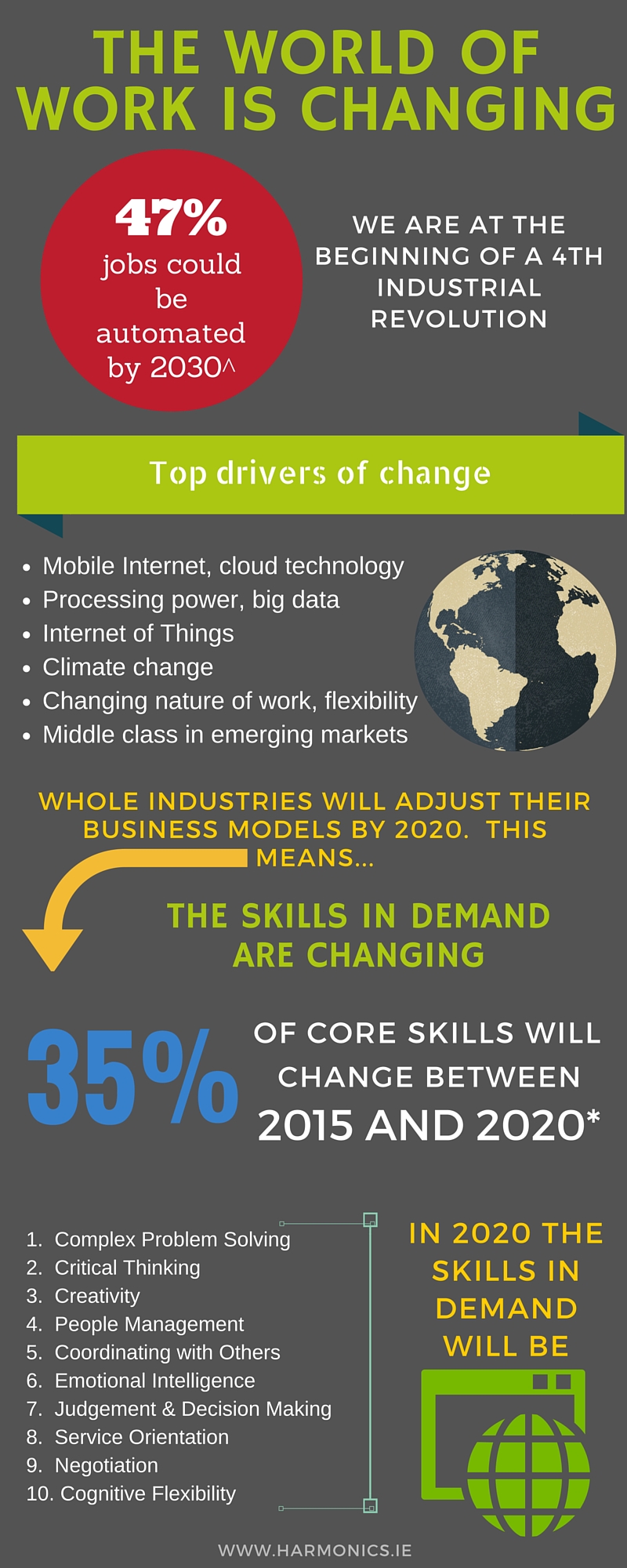
For individuals who are currently employed and who want to advance in their career, research data indicate that they need to invest in themselves to ensure they are enhancing their current skills and learning new skills. For example, recent McKinsey research finds that up to 45 percent of the tasks performed by US workers can be automated by currently existing technologies and about 60 percent of occupations could have 30 percent or more of their activities automated. As a result, professionals should ensure they are diversifying their skills to help ensure their long-term employability.

    4. Leadership & Collaborative Skills in Demand

Additionally, professionals should cultivate so-called “soft” skills such as communication, leadership and coaching. Given the rise of startups and the increased emphasis on speed and innovation, professionals must be able to lead and thrive in a less structured and more collaborative work environment.

While subject matter expertise is still important, our clients are telling us that they need more people who can lead and succeed in an ever-evolving and rapidly changing economy. Today, new business opportunities and challenges can emerge very quickly. Therefore, organisations need people who can anticipate and/or respond by engaging the human and financial resources that are necessary to be successful.

The biggest takeaway for individuals and employees is that they have to take responsibility for remaining employable. Every individual (and not only Millennials) must realise the importance of being a lifelong learner if they are to adapt to the new world of work.

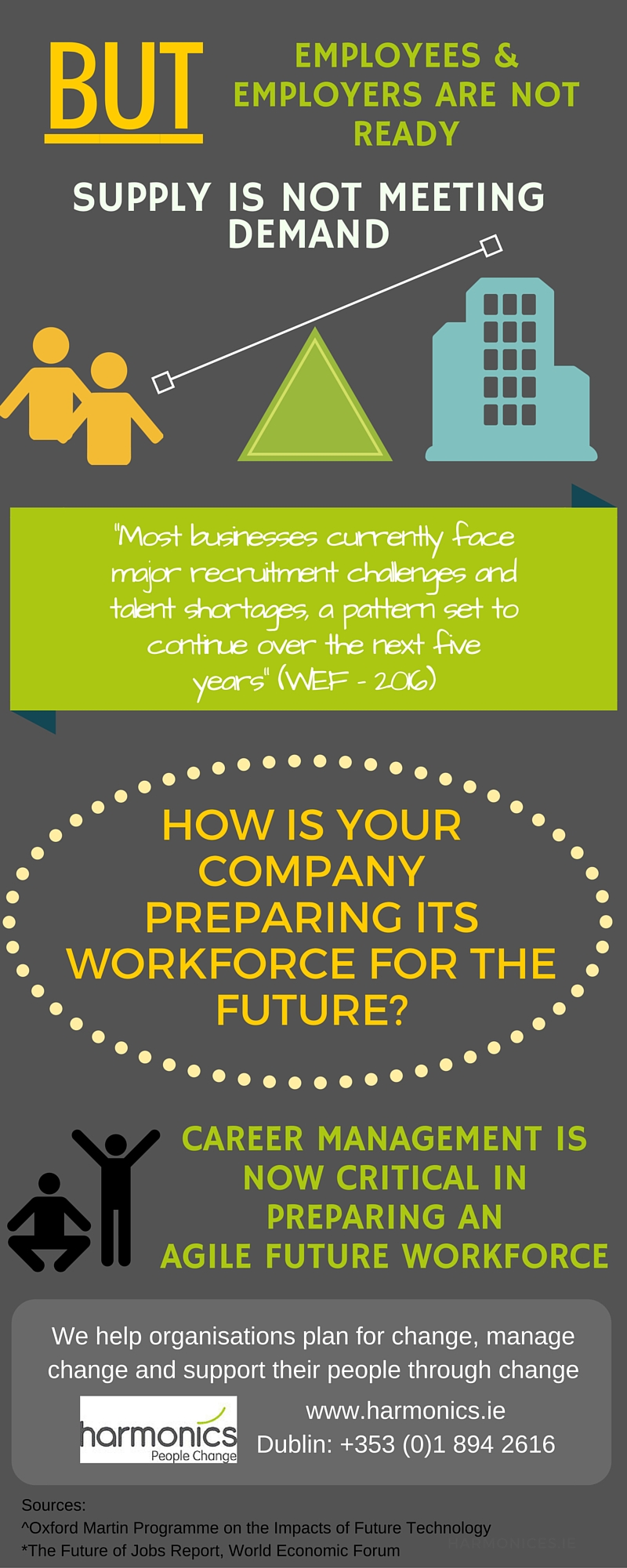
For organisations, they must help their workforce prepare for the new world of work through self-directed learning and career planning.

Categories
Blog

Action Plan for Skills Needs to be on the Election Agenda

Jobs or Skills – the Real Election Debate

The amount of jobs created, lack of quality jobs or the promise of new jobs in the next five years appears to be a constant theme across the election debate. One politician said the government needs to create secure, well paid jobs rather than low paid jobs undertaken by so many people across Ireland.

Whatever your political persuasion, there are a number of things to be put straight before any more promises are made about jobs in this election:

  1. The amount of low paid jobs will continue to grow because many service industries require part time, flexible staff to meet their customer changing needs. This isn’t going to change anytime soon. The only way out of working in this low paid sector is to become more valuable by learning new future work skills in demand.
  2. No government can promise secure well paid jobs in the future because they don’t exist anymore. Every job is temporary in the new world of work! The future of work is now increased project work, contracted employment and an increase in self-employment.
  3. Jobs were invented for the industrial era (e.g. Henry Ford car manufacturing). We have long left this era of production lines.  Machines have replaced the majority of this kind of work and in the next five years will replace much office and administration jobs too.
  4. No government can promise 200,000 jobs in the next five years; they can target it as a goal, but with the amount of global job displacement about to happen in the near future it is not straightforward.
  5. There has been a two tier jobs recovery. Those with the right skills and education got the best jobs and those without didn’t. As individuals, we have to take responsibility to upskill ourselves and stop waiting for the Government to bring back the low skilled and highly paid industrialised jobs.

Governments only have the power to create the conditions for multinational and indigenous businesses to create employment here. Businesses decide what they pay and this will be strongly based on the law of supply and demand.

Highly skilled engineers, scientists, sales and IT professionals will continue to be in demand. These high quality jobs will be taken up by those who are agile and constantly educating and developing themselves throughout their lifetime and not just once by going to college post leaving cert.

The jobs debate is superficial and not understood by politicians. It is easy to say we promise to create ‘X’ number of jobs in the economy in the next five years. It creates sound bytes and headlines for voters John and Mary to believe.

The real debate is the skills debate.

  1. Do we have the skills in this country to take advantage of the new indigenous start-ups and multinationals coming here or expanding their functions?
  2. Are our secondary schools still focused on points attainment for college places rather than developing the whole person with the future knowledge and skills needed to succeed in the future?
  3. Are our universities truly aligned and partnering with industry needs and flexible enough to swiftly develop and deliver “just in time” rather than “just in case” flexible learning for adult learners over 12 months of the year and on weekends?
  4. Are our third level students exiting college industry-ready with the employability skills to find new work?
  5. Are our retraining agencies really providing the type of skills and knowledge training necessary to meet the future workforce requirements?
  6. Are our people currently at work investing in themselves by developing future work skills or waiting for the employers to do it for them?
  7. Is the government creating a learning environment in this country by providing personal tax breaks to ensure lifetime learning is part of our lifetime journey?

Does Ireland Inc have the right skills to stay investor friendly?

Governments create the environment for industry to flourish. We have a lot going for us in this country; we often are the best at what we do in our chosen fields worldwide. We operate in a global economy where many US multinationals have established their EMEA headquarters here (and we hope the majority stay for many years to come). Inevitably, some of these new technology businesses will fail, move on or close down. That is the nature of globalised commerce. The great thing is these companies have come here in the first place and our people have had the opportunity to learn valuable skills for future employment opportunities. Jobs will come and go but Ireland Inc has now become a source of talented skilled people with a great work ethic. But how do we ensure we continue to have the right talent pool to attract further inward investment?  With so much change approaching with the future world of work, how can individuals remain employable?

The politicians appear to be basing their job figures on something over 3% economic growth for the next five years. Who would have predicted two years ago the sterling growth we had last year? So let’s get real, we don’t know if we are going to head back into a global recession due to factors outside our control, like China or oil prices, or if we’ll continue to grow at record levels. This is outside our control.

Why not personal tax breaks to create a Learning economy?

What our Government can control is the right environment and right taxation policies to create a learning economy. But the responsibility for the recovery also lies with us as citizens, we need to stop waiting for promised jobs and take more personal responsibility to change ourselves.

We need to change the election conversation from promising jobs to bridging the skills gap to highly skilled employment. In doing so, we will give everyone an opportunity for future employment, not just quick fix job lotto prediction numbers that win votes.

Categories
Blog

How to Attract Top Talent

They are telling us lies again Daddy


From an early age my daughter realised that toys advertised on TV did not live up to expectations when they came home from the toy store. So each time she saw a TV advert that appeared to be good to be true, she would give me this look and nod knowingly “they are telling us lies again Daddy, aren’t they?”

I mentioned this recently when speaking to a multinational organisation embarking on a new marketing and advertising recruitment campaign.  They wanted advice on how to differentiate their organisation in the crowded marketplace for engineering and IT talent.

Here is an uncomfortable truth for all HR departments with responsibility for recruitment:  Telling candidates that your culture is amazing, that you can offer employee benefits that beat the competition hands down, that your organisation is growing and that you need really great people to join you on your great journey, doesn’t work.

So many job adverts read the same.  The talent you seek are educated and discernible – now more than ever and, like my daughter, they see through it. They have fallen for these job advertising tricks before and been let down. They have been told super amazing stories from recruiters and head hunters about how this job is the perfect fit for them. Yes, some organisational cultures may be better than others, but we need to get real.

Does this apply to your organisation?

  1. Do you know people who are or have been burned out through work overload?
  2. Do you chase quarter on quarter numbers and is your corporate target double digit growth this year?
  3. Do you or your boss instigate regular developmental career conversations?
  4. Have you ever received career coaching support to be at the best you can be?
  5. If you reach a certain level, will you need to relocate to another location for future career growth?
  6. Do you feel respected and appreciated as a human being?

Most senior executives I coach through career transition are looking for the holy grail – the one organisation that truly gets it right and allows them the opportunity to become human, optimise their skills and be at their best. They want to move on from hierarchical pressure-driven organisations.

It is a consistent theme emerging from career coaching conversations I am having. And, as we reach the end of the first month of a new year, I can sense a growing frustration. People are tired of the race to deliver, tired of the endless back-to-back meetings, tired of unhealthy and stressful environments.

Organisations, if you are in a race for talent or want to keep the talent you have, you need to become more human.

Nature has four seasons for a reason, to replenish itself. From growing up on a farm, I know that grass cannot grow consistently 12 months of the year – not to mind year on year growth without serious damage being done to the field. Nature simply doesn’t work like this and neither do healthy organisations. So why not create healthy organisations and talent will come without the expensive marketing?

What talent want:

  1. They want to make a difference in their work, more autonomy, the opportunity to do their best and be at their best.
  2. They seek to work in organisations that offer regular feedback and recognition for work well done.
  3. They want to learn new skills, find challenging work but to feel less stressed.
  4. They want to work in an organisation that lives and breathes its values and not just have them on the wall for the visitors.
  5. They want a place where they can be themselves and feel valued as a human being.

This doesn’t sound too onerous does it? Yet why is it so rare?

Top talent will be attracted to an organisation committed to creating a human experience where they can join to develop new skills. The organisation needs to be mature enough to know this talent may leave again in a few years to develop newer skills elsewhere. Who knows, they may re-join later in their career with further embellished skills or, more importantly, they will refer others having experienced what is the exception rather than the norm.